


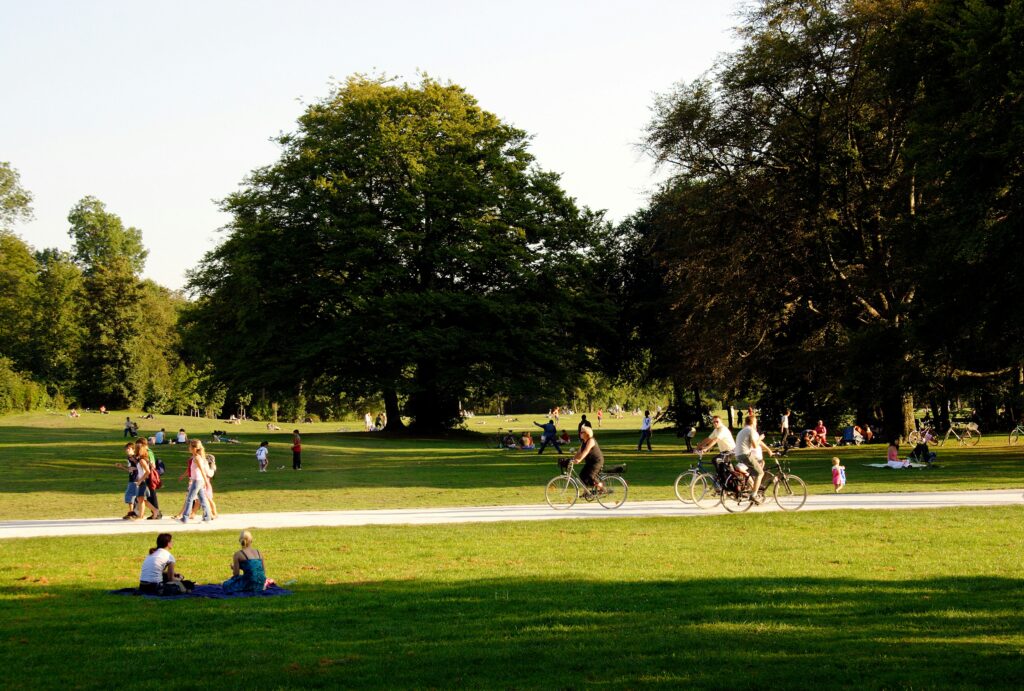
Did we reconnect with nature after COVID, or was it just a lockdown phase?
Photo by Ignacio Brosa on Unsplash
Did we reconnect with nature after COVID, or was it just a lockdown phase?
Introduction
Many of our evaluations include a focus on nature-based activities. Sometimes exercise in nature is considered explicitly from the perspective of overall physical health or wellbeing. There was an explosion of such projects inspired by the pandemic. Given we are five years on from those COVID times, it is worth revisiting a widespread hope at the time that the pandemic might permanently change our relationship with nature. The question now, several years later, is whether it actually did. The evidence suggests the answer is: partly.
Nature became more than leisure during lockdown
During lockdowns, outdoor space stopped being recreational and became infrastructural. Green spaces functioned as gyms, social venues, mental-health support systems and escapes from confinement. The UK Office for National Statistics (ONS) noted that lockdown restrictions altered how people interacted with green space, with many using nearby nature for exercise, stress relief and wellbeing (Office for National Statistics, 2021). In Wales, the People and Nature Survey found that since COVID restrictions began, 49% of adults had increased time spent outdoors and 29% had increased outdoor exercise, with most of those groups wanting to continue (Natural Resources Wales, 2022).
However, these reported experiences were not universal. A nationally representative UK study published in BMJ Open found that 63% of respondents reported decreased time spent visiting green spaces after movement restrictions began, often because of fear of infection, mobility limitations or lack of access. Older adults and lower socioeconomic groups were less likely to maintain visits (Burnett et al., 2021). That tension matters. The pandemic did not simply create a national awakening toward nature; it exposed how unequal access to nature already was. For some people, “daily exercise” meant running through a leafy park. For others, it meant circling overcrowded streets with no nearby green space at all.
Some habits stuck
Nevertheless, there is strong evidence that part of the behavioural shift endured. Natural England’s People and Nature Survey showed that participation in green and natural spaces in England remained consistently high even after restrictions eased. The proportion of adults visiting green or natural spaces within the previous two weeks remained around two-thirds of the population from 2020 onward: 62% in Year 1, rising to 66–67% by Years 4 and 5 (Natural England, 2025). That stability was significant because it suggested outdoor engagement did not simply collapse once gyms, pubs and international travel reopened.
However, the intensity of engagement softened. Natural England’s data did not show a dramatic post-lockdown retreat from nature. Weekly-or-more visits remained broadly stable: 68% of adults visited green and natural spaces at least weekly in 2024–25, compared with 69% in Years 2 and 3 and 71% in Year 1. The clearer change was in frequency mix: compared with the Covid-restriction years, fewer people were visiting daily, while more were visiting monthly (Natural England, 2025). This feels intuitively true. During lockdown, walking became ritualised because alternatives disappeared. Once normal schedules returned, nature had to compete again with commuting, entertainment, social obligations and digital life. What persisted was not necessarily the extraordinary volume of outdoor exercise, but a broader normalisation of it.
The pandemic quietly localised exercise
One of the clearest post-pandemic patterns is how local outdoor activity remains. Natural England found that, in 2024-25, 68% of journeys to green and natural spaces were within two miles, while 66% involved active travel such as walking or cycling (Natural England, 2025). Welsh evidence points in the same direction: 68% of adults visiting green and natural spaces walked to their destination, and nearly seven in ten visited somewhere within two miles of home, although the Welsh survey cautions against direct comparison with earlier datasets (Natural Resources Wales, 2022).
This may represent one of the pandemic’s most durable cultural shifts: people became more aware of their immediate environments. Before COVID, leisure often implied destination. During COVID, people learned to notice the overlooked geography of ordinary life, for example small parks, riverside paths, residential woodlands and urban commons. That hyperlocal relationship with nature appears to have endured more than the lockdown exercise boom itself.
Scotland Suggests the Shift Was Real
Scottish data perhaps offers the clearest evidence that some behavioural change genuinely persisted. The Scottish Household Survey found weekly outdoor visits increased from 56% in 2019 to 70% in 2022, before easing slightly to 68% in 2023. The Scottish Government described visits in 2023 as “still markedly higher than pre-COVID-19”, while also noting the 2022–23 fall was slight (Scottish Government, 2024). This matters because it weakens the argument that all pandemic-era outdoor activity was temporary behavioural distortion. At least in Scotland, the evidence points toward a meaningful long-term increase in engagement with outdoor environments.
We should be careful about romanticising the trend
There is a temptation to frame the pandemic as a moment when society rediscovered “what really matters.” But that narrative can become simplistic. Outdoor exercise increased partly because many alternatives disappeared. People were not necessarily choosing nature over modern life; modern life had temporarily shut down.
Transport statistics suggest overall walking and cycling have largely returned toward pre-pandemic norms rather than remaining dramatically elevated (Department for Transport, 2022). A longitudinal study of green space, physical activity and wellbeing during and after COVID also found that physical activity and wellbeing were higher after restrictions eased, but that reported access to public green space did not explain those changes (Poortinga et al., 2024). And while parks and green spaces gained visibility, inequalities in access remain deeply entrenched. The pandemic did not solve Britain’s longstanding disparities in access to safe, high-quality natural space. If anything, it made them harder to ignore.
What actually persisted?
So, to what extent did the increases in outdoor exercise in nature persist beyond lockdowns? Not completely, but not insignificantly either.
The strongest evidence suggests three lasting changes:
- People maintained higher levels of engagement with nearby nature than before the pandemic, evidenced in Scotland and parts of England, while Welsh evidence shows many people wanted to sustain increased outdoor time and outdoor exercise.
- Outdoor exercise became more culturally normalised, particularly walking.
- People developed more local relationships with green space, relying less on destination-based leisure.
What faded was the exceptional intensity of lockdown-era outdoor behaviour. In hindsight, the pandemic probably did not create a national conversion to nature. Instead, it accelerated trends that already existed beneath the surface: rising interest in wellbeing, localism, active travel and mental-health-oriented exercise. COVID did not invent those impulses. It simply removed enough distractions for people to notice them.
References
Burnett, H., Olsen, J.R., Nicholls, N. and Mitchell, R. (2021) ‘Change in time spent visiting and experiences of green space following restrictions on movement during the COVID-19 pandemic: a nationally representative cross-sectional study of UK adults’, BMJ Open, 11(3). Available at: BMJ Open paper PDF (Accessed: 16 May 2026).
Department for Transport (2022) Walking and cycling statistics, England: local area walking and cycling rates from the Active Lives Survey. Available at: DfT statistics (Accessed: 16 May 2026).
Natural England (2025) The People and Nature Surveys for England: Adults Year 5 annual report, April 2024 to March 2025. Available at: Government statistics report (Accessed: 16 May 2026).
Natural Resources Wales (2022) People and Nature Survey for Wales: Headline report 2021–22. Available at: UK Data Service study page (Accessed: 16 May 2026).
Office for National Statistics (2021) How has lockdown changed our relationship with nature? Available at: ONS article (Accessed: 16 May 2026).
Poortinga, W., Denney, J., Kelly, K.M., Oates, R., Phillips, R., Oliver, H. and Hallingberg, B. (2024) ‘Associations of reported access to public green space, physical activity and subjective wellbeing during and after the COVID-19 pandemic’, Journal of Environmental Psychology, 97, 102376. Available at: Cardiff Met publication record (Accessed: 16 May 2026).
Scottish Government (2024) Environment statistics from the Scottish Household Survey 2023: Visits to the outdoors. Available at: Scottish Government report (Accessed: 16 May 2026).